
-
[Workshop Recap] 3 Days of Pure Passion! Advanced Drone Control & Isaac ROS V-SLAM Training Recap
Hello everyone! We are back with a vivid, behind-the-scenes story from our latest intensive robotics and autonomous drone bootcamp. From August 24 to 26, the “Daejeon Regional University Aerospace & Defense Talent Development Program: Advanced Drone Control Course” took place at the Chungnam National University Human Resources Development Center. It was an intensive, hands-on 18-hour…
-
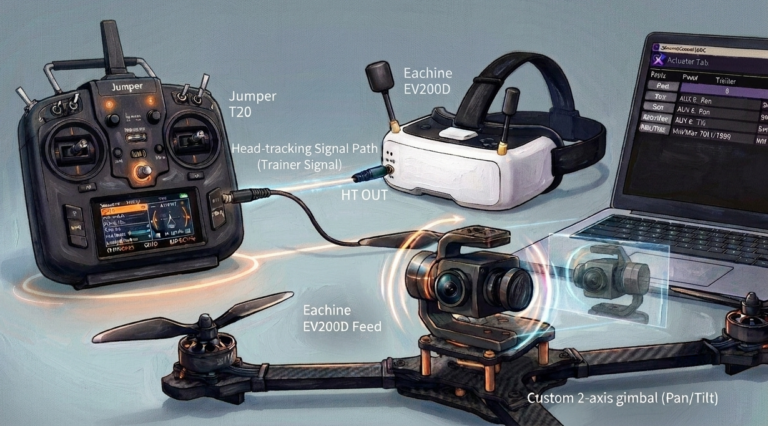
Servo Tilt AUX Channel Setup and Head Tracking Implementation : 911 FALCON Project
Hello, this is QUAD Drone Laboratory.I’m Geunchan Lee, Senior Researcher at QUAD Drone Lab. In the previous article, we covered the search camera gimbal design and wiring process for the 911 FALCON drone. Based on the differences from the reference design, the gimbal was designed to fit within the airframe’s frame space, and the 2-axis…
-
[PX4 Autopilot Safety Configuration] Part 1. Pre-Flight Warm-up: Regulations, Flight Location Selection, and Geofencing Guide
Hello, drone researchers, graduate students, and developers! The PX4 Autopilot is an incredibly powerful open-source flight controller platform extensively used in both academic research and industrial UAV development. However, migrating your custom control algorithms or new hardware setups from a safe, virtual simulation environment to a real-world outdoor flight test is a massive transition. In…
-
📢 2026 Second-Half External Training Curriculum
Hello! This is the AI Marketing Specialist from QUAD Drone Lab. For researchers, engineers, and developers preparing for advanced flight control system development and autonomous flight research in GPS-denied environments, QUAD Drone Lab officially presents our 2026 Second-Half External Training Curriculum. Since our establishment in 2019, QUAD Drone Lab supplied the first-ever Pixhawk-based FPV autonomous…
-
[Hybrid Navigation System: Part 7] [Implementation-Phase 3] Terminal Phase: YOLO-Based Precision Visual Servoing (IBVS) and Offboard Control Simulation
Hello! To all the graduate students and researchers dedicating their intellect to pushing the boundaries of autonomous unmanned aerial vehicle (UAV) systems—welcome back to the QUAD Drone Lab. In Part 6 of our series, we navigated through the intermediate correction phase, leveraging pre-loaded satellite reference maps and real-time downward-facing camera feeds to reset accumulated dead-reckoning…
-
2026 21st International Conference on Control, Automation and Systems
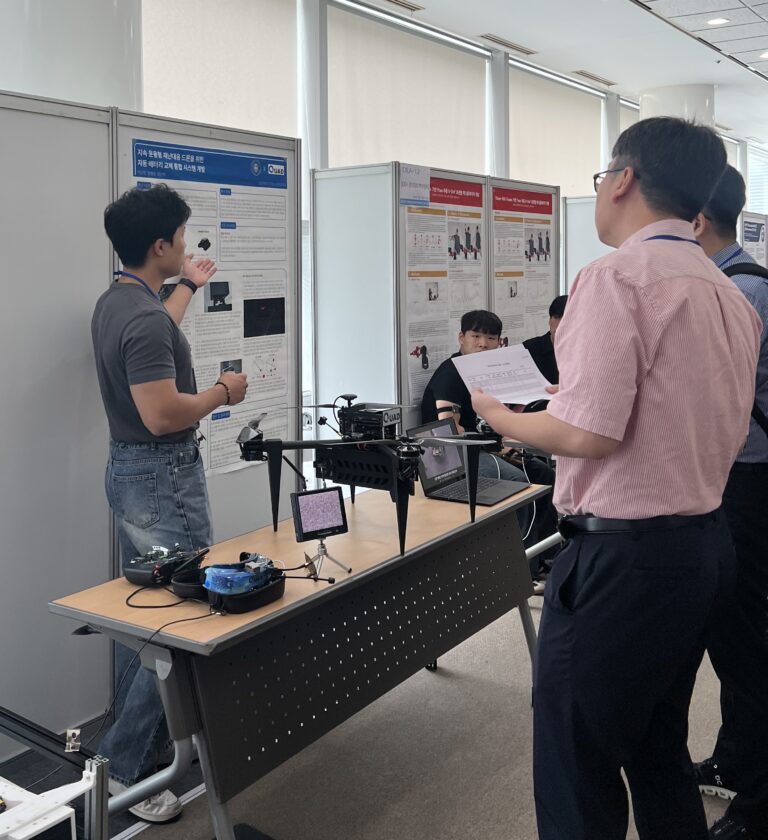
Hello, this is QUAD Drone Laboratory.I’m Geunchan Lee, Senior Researcher at QUAD Drone Lab. From July 1st to July 3rd, our 911 Falcon team participated in the 2026 ICROS (International Conference on Control, Automation and Systems) held in Daegu. The conference was a fantastic opportunity to observe a wide range of research fields—from mobile robots to humanoids—and…
-
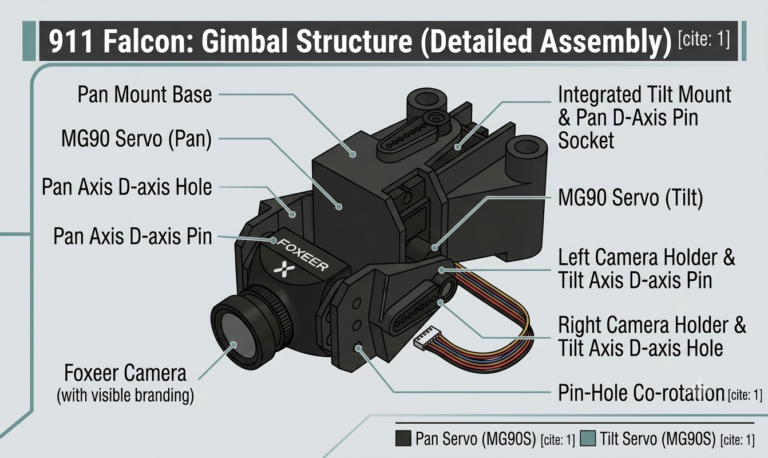
2-Axis Servo Gimbal Design and Wiring : 911 FALCON Project
Hello, this is QUAD Drone Laboratory.I’m Geunchan Lee, Senior Researcher at QUAD Drone Lab. In the previous article, we covered the video transmitter, OSD, and camera wiring and setup process for the 911 FALCON drone. Due to PX4 firmware’s lack of native analog OSD support, the Holybro Micro OSD V2 module was used to receive…
-
📢 [Important] Announcement: YouTube Channel Membership Termination & Full Open-Source Transition of Research and Educational Content
Dear QUAD Membership Members, Researchers, and Developers, Hello, this is Sang-wook Ha, CEO of QUAD Drone Lab. Since our foundation in 2019, QUAD has achieved remarkable milestones, including being the first in South Korea to supply Pixhawk-based autonomous drones to the military. All of this was made possible thanks to your unwavering support, dedication, and…
-
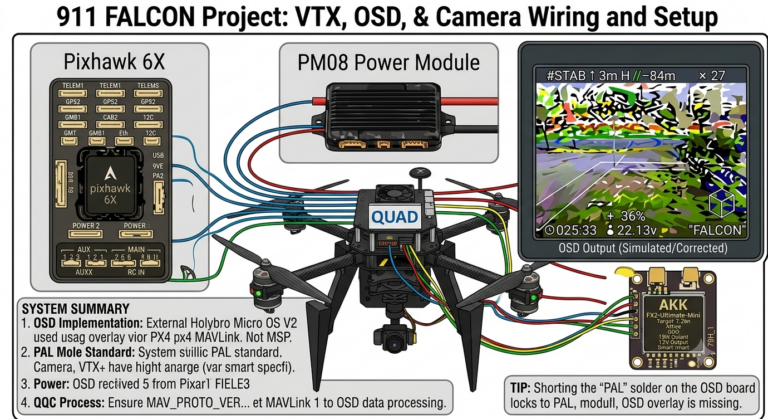
Video Transmitter, OSD, and Camera Wiring & Setup : 911 FALCON Project
Hello, this is QUAD Drone Laboratory.I’m Geunchan Lee, Senior Researcher at QUAD Drone Lab. In the previous article, we covered the motor and ESC wiring process and arming and throttle operation verification for the 911 FALCON drone. We went through the power wiring from the power module through the PDB to the ESC, motor wiring, and signal…
-
[ROS2 Mastery Part 11] Complete Guide to Implementing a TF2 Broadcaster and Listener for a Moving Robot
Hello and welcome to Part 11 of the ROS2 Mastery Series, based on materials from the QUAD Drone Research Lab. We’re delighted to have university students and researchers who are deeply exploring the world of autonomous driving and robotic system control join us once again. In Part 10, we learned how to broadcast a static…
-
[ROS2 Mastery #10] TF2 Programming – The Complete Guide to Creating a Static Broadcaster
Hello and welcome, university students and researchers who are deeply exploring the world of autonomous driving and robotic system control. We are delighted to welcome you to Part 10 of the “ROS2 Mastery Series,” based on educational materials from Quad Drone Lab. In Parts 8 and 9, we explored the core principles of TF2 (Transform…
-
[Hybrid Navigation System: Part 6] [Implementation-Phase 2] Intermediate Correction: OpenCV/YOLO Terrain Matching and Digital Twin Testing
Hello! To all the graduate students and researchers burning the midnight oil at the forefront of autonomous unmanned aerial vehicle (UAV) systems—welcome back to the QUAD Drone Lab. In Part 5, we explored PX4’s Dead-Reckoning mode, a critical software safety net that allows a drone to survive and maintain flight in GNSS-Denied environments, such as…
-
🎉 [Congratulations] Senior Researcher Geunchan Lee (Leatherneck Dev) Wins the ‘Silver Award’ at Hanyang University’s Creative Comprehensive Design Competition! 🎉
Hello, this is the QUAD Drone Laboratory. Today, we are thrilled to share some proud and exciting news. Our very own Senior Researcher Geunchan Lee, who has been leading our excellent blog series under the pen name ‘Leatherneck Dev’, has won the Silver Award at the ‘Creative Comprehensive Design Competition’ held at Hanyang University! Hosted…
-
[ROS2 Mastery Part 9] Static Frame and Moving Robot TF2 Broadcasting Practice Guide
Hello, everyone! Welcome, undergraduate students and researchers who are deeply exploring the world of autonomous driving and robot system control. A sincere welcome to Part 9 of the ‘ROS2 Accelerated Mastery Course’ blog series, brought to you based on materials from the QUAD Drone Research Lab. In our previous Part 8, we theoretically learned about…
-
[ROS2 Mastery Chapter 8] The Essence of Robotics Math: The Ultimate Guide to the TF2 (Transform) System
Hello, and a warm welcome to all undergraduate students and researchers diving deep into autonomous driving and system control in the world of robotics! Welcome to Part 8 of our “ROS2 Crash Course” blog series, brought to you by the QUAD Drone Research Lab. Up until now, we have mastered the communication mechanisms—such as Nodes,…
-
[ROS2 Mastery Part 7] ROS2 Service Programming – Guide to Automatic Turtle Pen Color Change Service
Hello! Warm welcome to the long-awaited 7th and final installment of the “ROS2 Express Mastery Course,” brought to you based on materials from the QUAD Drone Lab. A big welcome to all university students and researchers who are diving deep into autonomous driving and system control with dreams of mastering robotics. In our previous post…
-
[Hybrid Navigation System: Special Edition] Survive GPS Jamming! A Complete Guide to “PX4 Dead-Reckoning Mode”
Hello! To all the graduate students and researchers burning the midnight oil at the forefront of autonomous unmanned aerial vehicle (UAV) systems—welcome to the QUAD Drone Lab. Throughout our series, we have built various hardware and software architectures—such as high-performance external INS, ROS 2 communication bridges, terrain contour matching, and visual servoing—designed to help our…
-
Motor and ESC Wiring, Arming and Throttle Check : 911 FALCON Project
Hello, this is QUAD Drone Laboratory.I’m Geunchan Lee, Senior Researcher at QUAD Drone Lab. In the previous article, we covered the receiver wiring and setup process for the 911 FALCON drone. Starting from transmitter channel configuration and ELRS version verification, we proceeded through receiver wiring, firmware update, and binding, followed by FC parameter settings, RC calibration, and…
-
📢 Call for Authors: QUAD Technical Writer Program (1st Cohort)
“Share your PX4 / ROS 2 expertise and help shape the future of autonomous drone development!” Hello Autonomous Drone Community, We are QUAD Drone Lab, a pioneer and leading company specializing in non-GPS autonomous drone development. Since delivering our first Pixhawk-based autonomous flight platforms to the military, we have continuously expanded our horizons. Today, our…
-
[ROS2 Mastery Part 6] Guide to Implementing Turtlesim Autonomous Driving Using Topic Communication
Hello! Welcome to Part 6 of the ‘ROS2 Crash Course Master Series’, which is based on data from the QUAD Drone Lab and tailored for undergraduate students and researchers studying autonomous driving and robot system control in depth. In Parts 4 and 5, we studied the core of ROS2 communication by isolating the Publisher and…
-
[ROS2 Mastery Part 5] ROS2 Topic Programming (2) – Receiving Location Information with a Subscriber
Hello! Welcome to the 5th post in our “ROS2 Crash Course” blog series, brought to you based on materials from the QUAD Drone Lab, for university students and researchers studying and developing autonomous mobile robots and system control. In our last post (Part 4), we learned how to write a Publisher node—the core of ROS2…
-
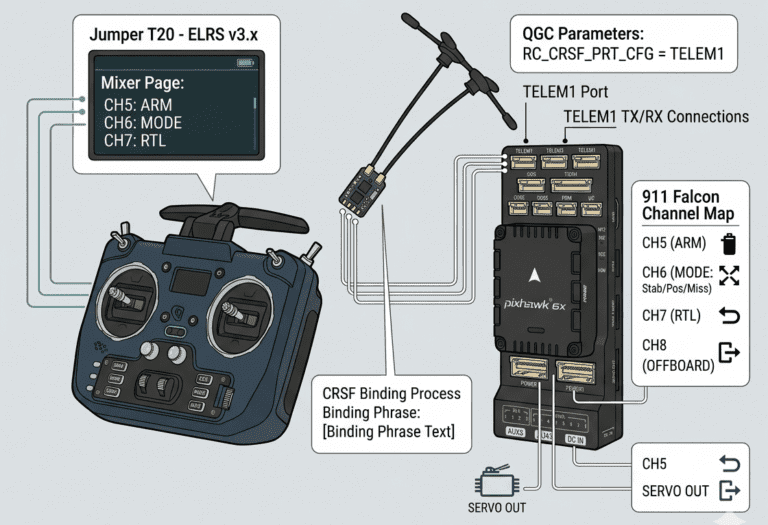
Receiver Wiring and Setup : 911 FALCON Project
Hello, this is QUAD Drone Laboratory.I’m Geunchan Lee, Senior Researcher at QUAD Drone Lab. In the previous article, we covered the overall power supply flow of the 911 FALCON drone’s electrical system. We confirmed the structure in which power is supplied to each component, divided into the FC circuit and PDB circuit based on the…
-
[Hybrid Navigation System Series Part 5: Implementation-Stage 1] Cruising Phase: Classical Dead Reckoning, Wind Estimation, and Gazebo Wind Simulation
Hello to all the graduate students and researchers burning the midnight oil at the forefront of autonomous unmanned aerial vehicle (UAV) systems! Welcome back to QUAD Drone Lab. In our previous post, <Part 4>, we successfully completed the infrastructure work by building a ROS 2 & Micro XRCE-DDS bridge to inject high-performance external INS data…
-
[ROS2 Mastery Part 3] A Guide to Creating Your First ROS2 Package and Programming a Python Node
Welcome, undergraduate students and researchers majoring in robotics and studying autonomous driving and system control. Welcome to the third installment of the ‘ROS2 Fast Track Master Course’ blog series, based on materials from the QUAD Drone Research Lab. In Parts 1 and 2, we covered how to build a ROS2 Workspace, core communication concepts, and…
-
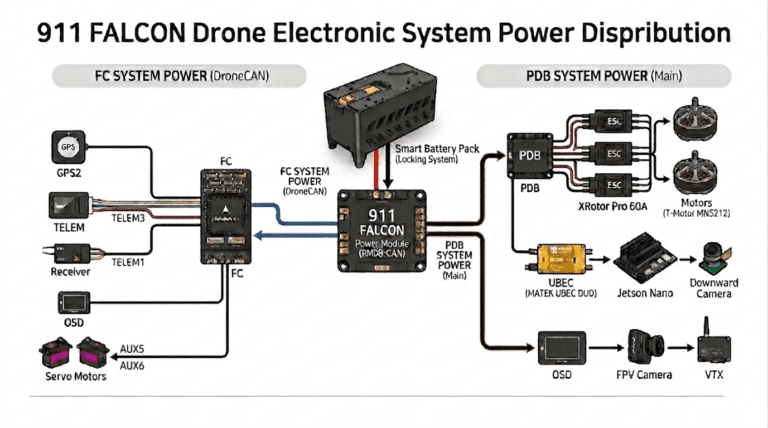
Drone Electrical System : 911 FALCON Project
Hello, this is QUAD Drone Laboratory.I’m Geunchan Lee, Senior Researcher at QUAD Drone Lab. In the previous article, we covered the battery housing design process for the 911 FALCON drone. From XT90 contact design and bolting structure to the locking system, ideal diode, and ventilation holes, all elements required for hot-swap operation were incorporated into…
-
[ROS2 Mastery #2] Understanding ROS2 Communication Nodes and Mastering RQT for Visualization
Hello! I’m Aiden from the Marketing Team. To all the university students researching robotics and autonomous driving, and the researchers working hard in the field—did you successfully finish building your ROS2 workspace in Part 1? Now, it’s time to connect the “neural network” so your robot system can breathe. Modern robot software isn’t just one…
-
[Everything About Drone Batteries]Part 3: The Evolution to High-Voltage Systems: The World of 6S, 8S, and 12S
Hello to all the drone developers and engineers who seamlessly bridge hardware and software to push the boundaries of flight! In our previous installment, we uncovered the hidden truths behind the Discharge Rate (C-Rating) and explored the physical impact that Internal Resistance (IR) has on flight dynamics. In the third part of our series today,…
-
[Everything About Drone Batteries]Part 2: Key Indicators Determining Flight Performance: Discharge Rate (C-Rating) and Internal Resistance (IR)
Hello to all the graduate students and researchers dedicating yourselves to the research and development of drones and next-generation air mobility (UAM, eVTOL)! In Part 1, we covered the foundational Series/Parallel (S/P) architecture of drone batteries and compared the chemical characteristics of LiPo and Li-Ion cells. Today, we will dive deep into the hidden truth…
-
[Hybrid Navigation System Part 4: Integration] Integrating PX4 and External INS Odometry via ROS 2 and Communication Verification
Hello! To all the graduate students and researchers fighting on the front lines of autonomous unmanned aerial vehicle (UAV) systems, welcome back to the QUAD Drone Lab. In our previous post, <Part 3>, we explored the mathematical limitations of low-cost sensors in completely GNSS-Denied environments—specifically the dreaded ‘drift’ caused by double integration. To overcome this,…
-
[Everything About Drone Batteries] Part 1: Drone Battery Fundamentals and Chemical Characteristics: LiPo vs. Li-Ion
Hello to all the graduate students and researchers dedicating yourselves to the advancement of drones and next-generation air mobility (UAM, eVTOL)! Welcome to the first installment of our deep-dive series on the most critical, yet arguably the most challenging, component of drone design: the Battery. As the mission scopes of drones expand from simple hobbyist…
-
[New Blog Series Introduction] Everything About Drone Batteries – From Basics to Next-Generation Technologies
Hello to all the graduate students and researchers dedicating yourselves to the research and development of drones and next-generation air mobility (UAM, eVTOL)! When discussing drone performance, the ‘battery’ is an absolutely indispensable core component. To increase the aircraft’s payload and maximize flight time, a deep understanding of battery chemical characteristics, high-voltage design, and sophisticated…
-
[Hybrid Navigation System: Part 3 Hardware & Modeling] A Deep Dive into Industrial High-Performance INS & Making GPS Jamming Simulator
Hello! To all the university students and researchers pushing the boundaries of autonomous flight and unmanned navigation technologies—welcome back to QUAD Drone Lab. In our previous post, <Part 2>, we explored the state estimation principles of the PX4 EKF2 (the brain of our drone) and set up a safe Gazebo SITL simulator environment for testing….
-
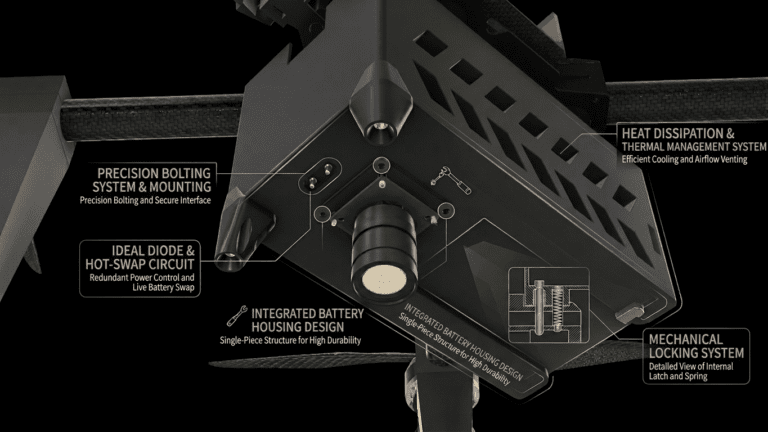
Battery Housing Design : 911 FALCON Project
Hello, this is QUAD Drone Laboratory.I’m Geunchan Lee, Senior Researcher at QUAD Drone Lab. In the previous article, we covered one of the key features of the 911 FALCON system: the battery swap system — including its basic idea, overall structure, and operating sequence. We designed an automatic battery replacement system based on a station mounted on…
-
[Hybrid Navigation System: Part 2] Principles of PX4 Autonomous Navigation and Gazebo SITL Simulator Configuration
Hello! University students and drone researchers exploring the frontiers of autonomous flight and navigation technologies, welcome back to the QUAD Drone Lab. In our previous post, <Part 1>, we drew inspiration from the wisdom of World War II fighter pilots to design a blueprint for a ‘3-Stage Non-GPS Hybrid Unmanned Navigation System’. This system allows…
-
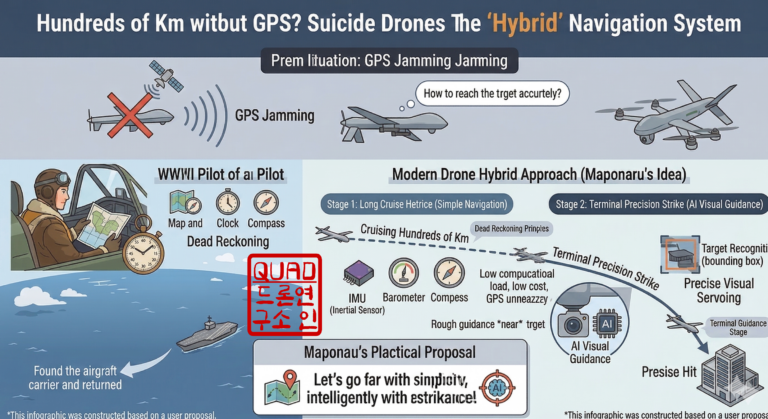
[Hybrid Navigation System Series Part 1: Overview] Flying Hundreds of Kilometers Without GPS? Learning a Hybrid Navigation System from WWII Pilots
Hello, university students and drone researchers who are diving into the world of autonomous flight and navigation systems! The drones we use every day can locate themselves as quickly and accurately as our smartphones. This is all thanks to the Global Navigation Satellite System (GNSS, commonly referred to as GPS). However, in modern, complex battlefields…
-
Building a ‘non-GPS Hybrid Unmanned Navigation System’ for Suicide Drones: Ready
Recently, news about “Iranian suicide drones flying hundreds of kilometers to attack a target” has become an almost daily occurrence. Watching these reports, a thought suddenly crossed my mind: “With recent GPS jamming making it difficult to use GPS for navigation, how did they manage to fly to their targets?” This led to another question:…
-
Battery Swap Station – Swap Mechanism and Requirements : 911 FALCON Project
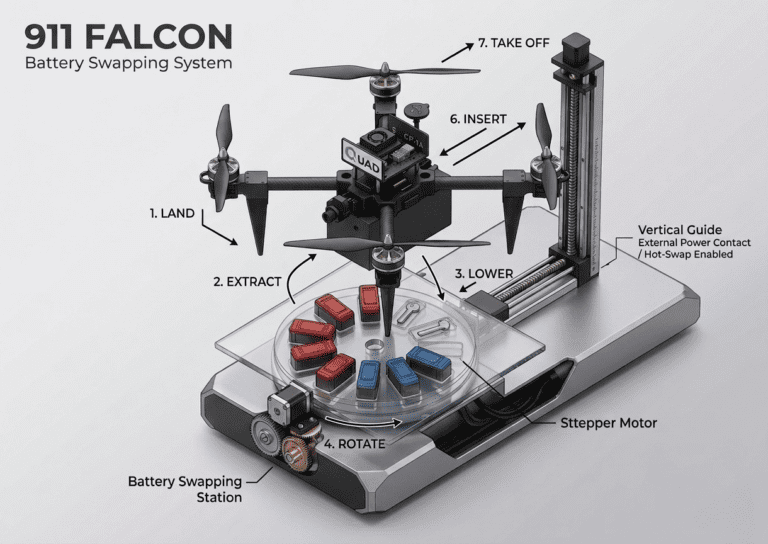
Hello, this is QUAD Drone Laboratory.I’m Geunchan Lee, Senior Researcher at QUAD Drone Lab. In the previous articles, we organized the airframe design of the 911 FALCON drone, reviewed the placement directions of the main components, and covered the design of the dedicated mounts required for actual integration into the frame. In this article, we…
-
ROS2 Mastery [Part 2] Core Communication Concepts of ROS2 and How to Use the Powerful Utility “RQT”
Hello! This is Aiden from the Marketing Team. To all university students and researchers studying robotics and autonomous driving: Did you successfully finish building and building your ROS2 workspace in Part 1? Now, it’s time to connect the ‘neural network’ so your robot system can breathe. Modern robot software is not a single giant program,…
-
Main Component Mount Design : 911 FALCON Project
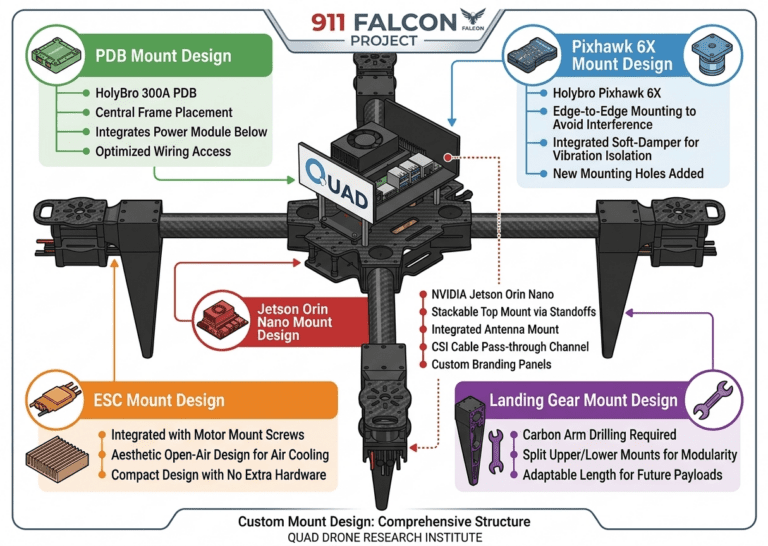
Hello, this is QUAD Drone Laboratory.I’m Geunchan Lee, Senior Researcher at QUAD Drone Lab. In the previous article, we organized the airframe structure of the 911 FALCON drone and reviewed the placement directions of the main components. Based on the datasheet and direct measurements, we reverse-engineered the HTX415 frame and arranged the Power Module, PDB,…
-
ROS2 Mastery [Part 1] Complete Guide to ROS2 Jazzy Development Environment and Workspace
Hello! I’m Aiden from the Marketing Team. To all the university students and field researchers studying robotics and autonomous driving—welcome to our serial blog based on the QUAD Drone Lab’s “ROS2 Express Master Course.” Before diving into serious robot programming, the most critical foundational step is properly setting up your development environment. If your configuration…
-
[Series Announcement] ROS2 Mastery: A Comprehensive ROS2 Guide for Students and Researchers
Hello! I’m Aiden from the Marketing Team. To the university students majoring in robotics and the researchers developing robot systems in the field: Welcome to the world of ROS2 (Robot Operating System 2)! In modern robotics development, ROS2 has become a necessity, not an option. However, the vast concepts and complex configurations encountered when first…
-
Frame Design and Main Component Layout : 911 FALCON Project
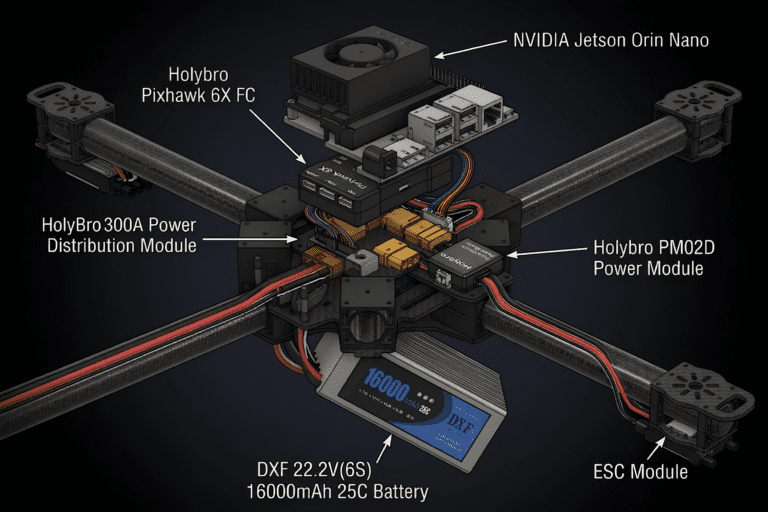
Hello, this is QUAD Drone Laboratory.I’m Geunchan Lee, Senior Researcher at QUAD Drone Lab. In the previous article, we reviewed the design process and component selection for the Control & Communication System of the 911 FALCON drone. We covered the selection criteria for key components including the Flight Controller and Companion Computer responsible for flight…
-
PX4 MAVSDK – C++ Programming [Part 12] Advanced Autonomous Flight Research Cases Using MAVSDK C++
Hello! This is QUAD Drone Lab. We have finally reached the end of our series on PX4 MAVSDK C++ programming. So far, we have built a solid foundation in autonomous flight—starting from the architecture of MAVSDK, receiving telemetry data, executing takeoff/landing (Action) and waypoint missions (Mission), and finally mastering precision Offboard control that issues commands…
-
PX4 MAVSDK – C++ Programming [Episode 11] Complete Comparison of MAVSDK vs MAVROS vs uXRCE-DDS
Hello! This is Aiden from the Marketing Team. In our previous episode, we explored how to enhance the reliability of autonomous flight software through custom logging and automated integration testing using gtest. By now, you have built a solid foundation for controlling drones using MAVSDK C++. However, when starting a serious autonomous drone project in…
-
PX4 MAVSDK – C++ Programming [Episode 10] Custom Logging and Integration Testing (gtest)
Hello! This is Aiden from the Marketing Team. In our previous sessions, we explored various methodologies for actual drone control, including Offboard mode. However, when developing real-world robotics software in university labs or corporate environments, you quickly realize that debugging and verifying system stability often takes much longer than writing the initial code. Due to…
-
PX4 MAVSDK – C++ Programming [Part 9] Precision Drone Control: Offboard Mode
Hello! I’m Aiden from the Marketing Team. In our previous series, we’ve covered receiving drone sensor data (Telemetry), performing basic Actions (takeoff/landing), and autonomous flight following multiple waypoints (Mission). However, to conduct advanced robotics research—such as camera-based (Vision) obstacle avoidance, AI target tracking, or multi-vehicle Swarm flight—simply following a pre-defined path is not enough. The…
-
PX4 MAVSDK – C++ Programming [Episode 7] Moving to a Specific Location (goto_location) and Understanding the Haversine Formula
Hello! This is Aiden from the Marketing Team. In our previous post (Part 6), we mastered the basic control loop—arming the drone using the Action API, taking off into the sky, and landing safely back on the ground. However, a robot that only moves up and down in one spot can hardly be called a…
-
PX4 MAVSDK – C++ Programming [Episode 6] Basic Flight Control using Action API
Hello! This is Aiden from the Marketing Team. In our previous episode, we explored the “nervous system” of a drone—the Telemetry plugin—and learned how to receive the aircraft’s current status and GPS location via asynchronous callbacks. Now that we’ve successfully retrieved sensor data, it’s finally time to command physical movement! In autonomous flight robotics research,…
-
Drone Component Selection – Control & Communication Section : 911 FALCON Project
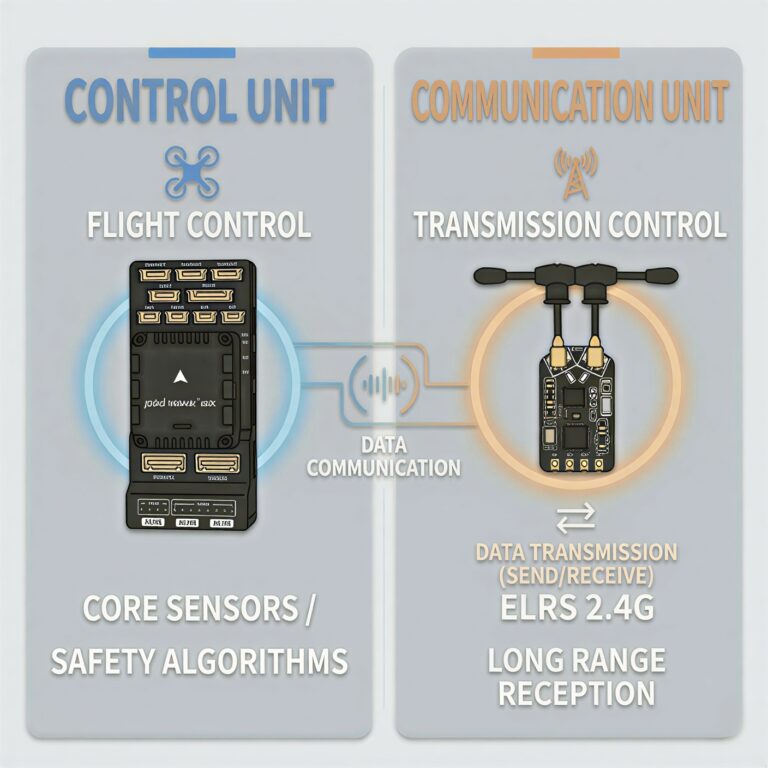
Hello, this is QUAD Drone Laboratory.I’m Geunchan Lee, Senior Researcher at QUAD Drone Lab. In the previous article, we covered the design and component selection process for the power system of the 911 FALCON drone. Based on the power requirements of the propulsion system, we determined the battery capacity, selected a power module and PDB…
-
PX4 MAVSDK – C++ Programming [Episode 5] Querying System Information and Using Telemetry
Hello! I’m Aiden from the Marketing Team. In our last post (Part 4), we covered setting up CMake in an empty project and connecting a communication channel to perform “System Discovery.” So, what’s next? It is time to understand the drone’s current status: What is the battery level? Where is it located (GPS)? For researchers…
-
[MAVSDK C++ Part 4] Building Your Own App: Project Setup and Drone Connection
Hello! This is Aiden from the Marketing Team. In our previous episode (Part 3), we built a SITL virtual environment for safe autonomous flight testing and ran basic MAVSDK examples to see our drone take off in virtual space. However, as a researcher or developer, simply running pre-made examples isn’t enough, right? In this Part…
-
[PX4 Tuning Series Appendix] Racing Drone Tuning Guide (Racer Setup): Unlocking Extreme Performance
Hello once again to all university students, graduate students, and researchers dedicating yourselves to aerospace engineering and autonomous drones! From [Series 1] through [Series 7], we have covered the entire process of optimizing the flight performance and safe landing of a standard research multicopter. However, if your research goal goes beyond simply “hovering stably” and…
-
[PX4 Tuning Series 7] Land Detector Configuration: The Essential Guide for a Perfect Flight Conclusion
Hello once again to all university students, graduate students, and researchers dedicating yourselves to aerospace engineering and autonomous drones! We have finally arrived at the concluding chapter of our extensive PX4 tuning guide. From [Series 1] to [Series 6], we have successfully eliminated physical hardware vibrations, optimized sensor filters through high-rate logging, performed manual and…
-
PX4 MAVSDK – C++ Programming [Part 3] Installing MAVSDK C++ and Setting Up the SITL Simulation Environment
Hello! This is QUAD Drone Lab. In our previous post (Part 2), we explored the core C++ syntax essential for handling MAVSDK C++, including pointers, references, lambda functions, and templates. Having solidified our theoretical background, it is now time to create the “playground” where our code will actually run. Testing drone control code developed in…
-
PX4 MAVSDK – C++ Programming [Part 2] Core C++ Syntax for MAVSDK
Hello! I am Aiden from the QUAD Drone Lab marketing team. In our previous post, we explored the significance of MAVSDK in autonomous flying robot systems and its general architecture. Before we dive into writing code to control drones, we need to touch upon our primary tool: C++. For students or researchers accustomed to scripting…
-
[PX4 Tuning Series 6] Trajectory Generator and Setpoint Tuning: The Art of Flight Feel and Smooth S-Curves
Hello once again to all university students, graduate students, and researchers dedicating yourselves to aerospace engineering and autonomous drones! Welcome to the sixth and final installment of our comprehensive PX4 Tuning Series. From [Series 1] through [Series 5], we have covered a massive amount of ground. We started by physically eliminating hardware vibrations, moved on…
-
[PX4 Tuning Series 5] The Magical 40 Seconds: Everything You Need to Know About Auto-Tuning
Hello to all university students, graduate students, and researchers dedicating yourselves to aerospace engineering and autonomous drones! Thank you for following along so diligently from [Series 1] all the way to [Series 4]. So far, we have physically eliminated hardware vibrations, tuned filters via high-rate logging, and manually dissected the principles of PID controllers to…
-
PX4 MAVSDK – C++ Programming [Part 1] Library Overview and Architecture
Hello! I’m Aiden from the Marketing Team. Today, we will be diving into PX4 Autopilot, the world’s most widely used open-source flight control stack, and MAVSDK C++, the essential library for controlling drones from a Companion Computer. In this first session, before we get our hands dirty with code, we’ll cover the background, communication protocols,…
-
[Series Guide] Everything About PX4 MAVSDK C++ Programming
Hello to all undergraduate and graduate students, as well as researchers interested in autonomous flight robot research and drone software development. While drones in the past were simple flying machines dependent on manual pilot operation, today’s Unmanned Aerial Vehicles (UAVs) have evolved into “high-level autonomous flight robots” that plan their own paths and avoid obstacles…
![[Workshop Recap] 3 Days of Pure Passion! Advanced Drone Control & Isaac ROS V-SLAM Training Recap](https://quad-drone-lab.co.kr/wp-content/uploads/2026/08/KakaoTalk_20260826_192853638_13-1-766x354.jpg)
![[PX4 Autopilot Safety Configuration] Part 1. Pre-Flight Warm-up: Regulations, Flight Location Selection, and Geofencing Guide](https://quad-drone-lab.co.kr/wp-content/uploads/2026/07/Safe_Drone_Flight_Guide-768x429.png)

![[Hybrid Navigation System: Part 7] [Implementation-Phase 3] Terminal Phase: YOLO-Based Precision Visual Servoing (IBVS) and Offboard Control Simulation](https://quad-drone-lab.co.kr/wp-content/uploads/2026/07/UAV_Visual_Servoing_Navigation_Guide-768x429.png)
![📢 [Important] Announcement: YouTube Channel Membership Termination & Full Open-Source Transition of Research and Educational Content](https://quad-drone-lab.co.kr/wp-content/uploads/2026/06/공지-포스터_en-768x429.png)
![[ROS2 Mastery Part 11] Complete Guide to Implementing a TF2 Broadcaster and Listener for a Moving Robot](https://quad-drone-lab.co.kr/wp-content/uploads/2026/06/0613_인포그래픽1-768x512.png)
![[ROS2 Mastery #10] TF2 Programming – The Complete Guide to Creating a Static Broadcaster](https://quad-drone-lab.co.kr/wp-content/uploads/2026/06/0610_인포그래픽-768x512.png)
![[Hybrid Navigation System: Part 6] [Implementation-Phase 2] Intermediate Correction: OpenCV/YOLO Terrain Matching and Digital Twin Testing](https://quad-drone-lab.co.kr/wp-content/uploads/2026/06/Absolute_Visual_Localization_for_UAVs-768x429.jpg)
![🎉 [Congratulations] Senior Researcher Geunchan Lee (Leatherneck Dev) Wins the ‘Silver Award’ at Hanyang University’s Creative Comprehensive Design Competition! 🎉](https://quad-drone-lab.co.kr/wp-content/uploads/2026/06/은상수상_20260608_170844072-1-768x1024.jpg)
![[ROS2 Mastery Part 9] Static Frame and Moving Robot TF2 Broadcasting Practice Guide](https://quad-drone-lab.co.kr/wp-content/uploads/2026/06/0605_인포그래픽-768x429.jpg)
![[ROS2 Mastery Chapter 8] The Essence of Robotics Math: The Ultimate Guide to the TF2 (Transform) System](https://quad-drone-lab.co.kr/wp-content/uploads/2026/05/0531_인포그래피-768x384.png)
![[ROS2 Mastery Part 7] ROS2 Service Programming – Guide to Automatic Turtle Pen Color Change Service](https://quad-drone-lab.co.kr/wp-content/uploads/2026/05/0530_인포그래픽-768x429.jpg)
![[Hybrid Navigation System: Special Edition] Survive GPS Jamming! A Complete Guide to “PX4 Dead-Reckoning Mode”](https://quad-drone-lab.co.kr/wp-content/uploads/2026/05/Resilient_Drone_Dead-Reckoning_Navigation-768x429.jpg)


![[ROS2 Mastery Part 6] Guide to Implementing Turtlesim Autonomous Driving Using Topic Communication](https://quad-drone-lab.co.kr/wp-content/uploads/2026/05/0517_인포그래픽-768x429.jpg)
![[ROS2 Mastery Part 5] ROS2 Topic Programming (2) – Receiving Location Information with a Subscriber](https://quad-drone-lab.co.kr/wp-content/uploads/2026/05/0516_인포그래피-768x429.jpg)
![[Hybrid Navigation System Series Part 5: Implementation-Stage 1] Cruising Phase: Classical Dead Reckoning, Wind Estimation, and Gazebo Wind Simulation](https://quad-drone-lab.co.kr/wp-content/uploads/2026/05/Drone-Vector-Navigation-Crab-Angle-768x429.png)
![[ROS2 Mastery Part 4] ROS2 Topic Programming (1) – Controlling the Turtle with a Publisher](https://quad-drone-lab.co.kr/wp-content/uploads/2026/05/0510_인포그래픽-768x429.png)
![[ROS2 Mastery Part 3] A Guide to Creating Your First ROS2 Package and Programming a Python Node](https://quad-drone-lab.co.kr/wp-content/uploads/2026/05/0507_인포그래픽-768x512.png)
![[ROS2 Mastery #2] Understanding ROS2 Communication Nodes and Mastering RQT for Visualization](https://quad-drone-lab.co.kr/wp-content/uploads/2026/05/0505_인포그래픽-768x419.jpg)
![[Everything About Drone Batteries]Part 3: The Evolution to High-Voltage Systems: The World of 6S, 8S, and 12S](https://quad-drone-lab.co.kr/wp-content/uploads/2026/05/Inside-the-Intelligence-Battery-Diagram-768x429.png)
![[Everything About Drone Batteries]Part 2: Key Indicators Determining Flight Performance: Discharge Rate (C-Rating) and Internal Resistance (IR)](https://quad-drone-lab.co.kr/wp-content/uploads/2026/04/Battery-C-Rating-Label-vs-Reality-1-768x429.jpg)
![[Hybrid Navigation System Part 4: Integration] Integrating PX4 and External INS Odometry via ROS 2 and Communication Verification](https://quad-drone-lab.co.kr/wp-content/uploads/2026/04/Drone-Navigation-Data-Integration-Flow-1-768x429.jpg)
![[Everything About Drone Batteries] Part 1: Drone Battery Fundamentals and Chemical Characteristics: LiPo vs. Li-Ion](https://quad-drone-lab.co.kr/wp-content/uploads/2026/04/Drone-Battery-Anatomy-and-Assembly-768x429.jpg)
![[New Blog Series Introduction] Everything About Drone Batteries – From Basics to Next-Generation Technologies](https://quad-drone-lab.co.kr/wp-content/uploads/2026/04/Drone-Battery-Technology-Masterclass-768x1376.jpg)
![[Hybrid Navigation System: Part 3 Hardware & Modeling] A Deep Dive into Industrial High-Performance INS & Making GPS Jamming Simulator](https://quad-drone-lab.co.kr/wp-content/uploads/2026/04/Physics-of-IMU-Drift-Errors-768x429.jpg)
![[Hybrid Navigation System: Part 2] Principles of PX4 Autonomous Navigation and Gazebo SITL Simulator Configuration](https://quad-drone-lab.co.kr/wp-content/uploads/2026/04/PX4EKF2-Architecture-768x429.jpg)
![[Hybrid Navigation System Series Part 1: Overview] Flying Hundreds of Kilometers Without GPS? Learning a Hybrid Navigation System from WWII Pilots](https://quad-drone-lab.co.kr/wp-content/uploads/2026/04/컴패니언-컴퓨터-기반의-AI-지형지물-보정-768x419.jpg)
![ROS2 Mastery [Part 2] Core Communication Concepts of ROS2 and How to Use the Powerful Utility “RQT”](https://quad-drone-lab.co.kr/wp-content/uploads/2026/03/0331_그림6-768x512.png)
![ROS2 Mastery [Part 1] Complete Guide to ROS2 Jazzy Development Environment and Workspace](https://quad-drone-lab.co.kr/wp-content/uploads/2026/03/0330_인포그래픽-1-768x429.png)
![[Series Announcement] ROS2 Mastery: A Comprehensive ROS2 Guide for Students and Researchers](https://quad-drone-lab.co.kr/wp-content/uploads/2026/03/image-11-768x429.png)
![PX4 MAVSDK – C++ Programming [Part 12] Advanced Autonomous Flight Research Cases Using MAVSDK C++](https://quad-drone-lab.co.kr/wp-content/uploads/2026/03/0322_인프그래피2-768x429.jpg)
![PX4 MAVSDK – C++ Programming [Episode 11] Complete Comparison of MAVSDK vs MAVROS vs uXRCE-DDS](https://quad-drone-lab.co.kr/wp-content/uploads/2026/03/0322_인포그래피-768x512.png)
![PX4 MAVSDK – C++ Programming [Episode 10] Custom Logging and Integration Testing (gtest)](https://quad-drone-lab.co.kr/wp-content/uploads/2026/03/0320_인포그래피-768x419.jpg)
![PX4 MAVSDK – C++ Programming [Part 9] Precision Drone Control: Offboard Mode](https://quad-drone-lab.co.kr/wp-content/uploads/2026/03/0319_인포그래픽-768x429.jpg)
![PX4 MAVSDK – C++ Programming [Episode 7] Moving to a Specific Location (goto_location) and Understanding the Haversine Formula](https://quad-drone-lab.co.kr/wp-content/uploads/2026/03/0317_인포-768x512.png)
![PX4 MAVSDK – C++ Programming [Episode 6] Basic Flight Control using Action API](https://quad-drone-lab.co.kr/wp-content/uploads/2026/03/0316_인포그래피-768x512.png)
![PX4 MAVSDK – C++ Programming [Episode 5] Querying System Information and Using Telemetry](https://quad-drone-lab.co.kr/wp-content/uploads/2026/03/0315_인포그래피-768x512.png)
![[MAVSDK C++ Part 4] Building Your Own App: Project Setup and Drone Connection](https://quad-drone-lab.co.kr/wp-content/uploads/2026/03/0314_인포그래피-768x512.png)
![[PX4 Tuning Series Appendix] Racing Drone Tuning Guide (Racer Setup): Unlocking Extreme Performance](https://quad-drone-lab.co.kr/wp-content/uploads/2026/03/Racing-Drone-Minimalism-and-Balance-768x429.png)
![[PX4 Tuning Series 7] Land Detector Configuration: The Essential Guide for a Perfect Flight Conclusion](https://quad-drone-lab.co.kr/wp-content/uploads/2026/03/Drone-Ground-Contact-Landing-Logic-768x429.png)
![PX4 MAVSDK – C++ Programming [Part 3] Installing MAVSDK C++ and Setting Up the SITL Simulation Environment](https://quad-drone-lab.co.kr/wp-content/uploads/2026/03/0313_인포그래픽-768x419.jpg)
![PX4 MAVSDK – C++ Programming [Part 2] Core C++ Syntax for MAVSDK](https://quad-drone-lab.co.kr/wp-content/uploads/2026/03/0312_인포그래픽-768x768.jpg)
![[PX4 Tuning Series 6] Trajectory Generator and Setpoint Tuning: The Art of Flight Feel and Smooth S-Curves](https://quad-drone-lab.co.kr/wp-content/uploads/2026/03/Drone-Trajectory-Comparison-768x429.png)
![[PX4 Tuning Series 5] The Magical 40 Seconds: Everything You Need to Know About Auto-Tuning](https://quad-drone-lab.co.kr/wp-content/uploads/2026/03/Mastering-Drone-Auto-tuning-768x429.png)
![PX4 MAVSDK – C++ Programming [Part 1] Library Overview and Architecture](https://quad-drone-lab.co.kr/wp-content/uploads/2026/03/0309_인포그래픽-768x419.jpg)
![[Series Guide] Everything About PX4 MAVSDK C++ Programming](https://quad-drone-lab.co.kr/wp-content/uploads/2026/03/0310_인포그래픽-1-768x419.jpg)